Sierra Leone Has Built a Peace Architecture. Now It Must Make It Work
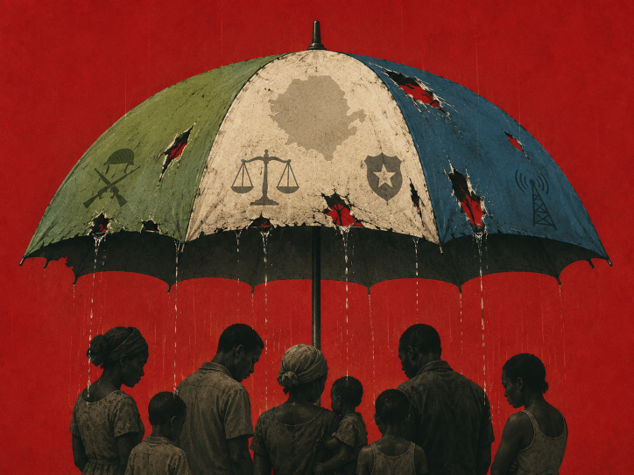
The country has created institutions to prevent conflict, but lasting stability will depend on credible electoral and constitutional reform, accountable policing, and a fairer distribution of political and economic power.
Sierra Leone’s journey from civil war to democratic consolidation is one of Africa’s most remarkable recovery stories. Since the end of the eleven-year conflict in 2002, the country has held five consecutive general elections and experienced peaceful transfers of power in 2007 and 2018. In the 2026 Global Peace Index, it ranked eighth in sub-Saharan Africa and 74th globally. Yet beneath these achievements, deep-rooted vulnerabilities persist.
The nation has institutionalised much of the machinery of peace, but it has not sufficiently transformed the political settlement that produces instability. Unless the government decentralises power, implements credible electoral and constitutional reforms, and gives excluded citizens a meaningful economic stake, its peace architecture will remain stronger on paper than in practice. Promoting peace and security must therefore go beyond maintaining order. It must address the structural causes of instability and build institutions capable of sustaining peace over the long term.
The Roots of Instability
The causes of Sierra Leone’s civil war were not simply the actions of rebel groups. They were rooted in a profound failure of governance. Decades of authoritarian rule produced economic decline, widespread poverty, high youth unemployment, violations of the rule of law, rural isolation, and deep ethnic and regional grievances. The state became a vehicle for elite enrichment rather than public service, and vast numbers of citizens—particularly young people in rural areas—were left with no stake in the system.
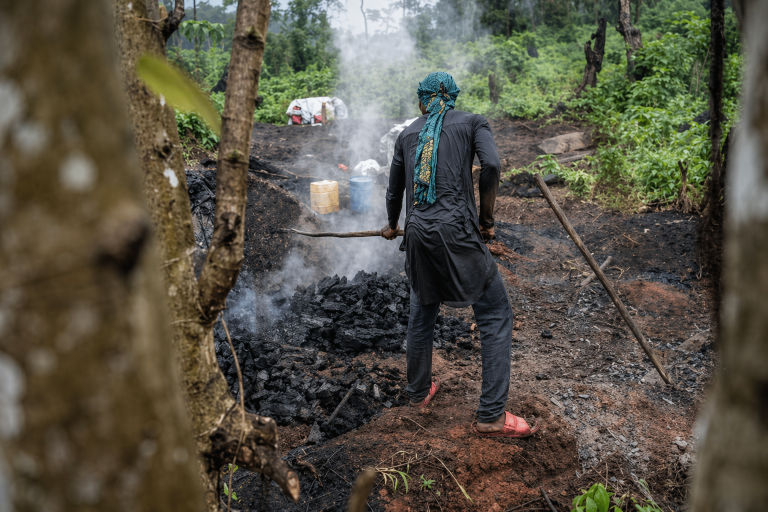
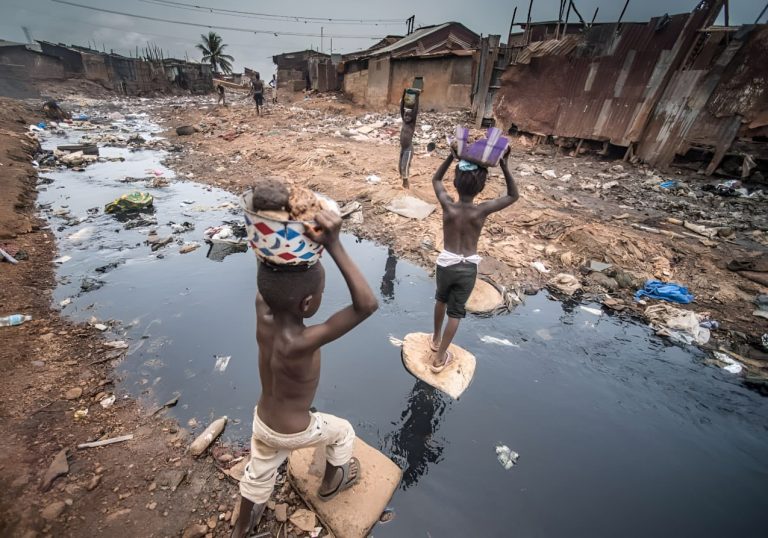
These conditions did not disappear with the signing of the Lomé Peace Accord in 1999 or the end of active hostilities in 2002. The latest national household survey found that 56.8 percent of Sierra Leoneans lived below the national poverty line, with poverty far more severe in rural areas. Many young people remain trapped in underemployment and insecure informal work. Poor infrastructure, weak institutions, governance shortcomings and food insecurity continue to threaten political stability and social peace.
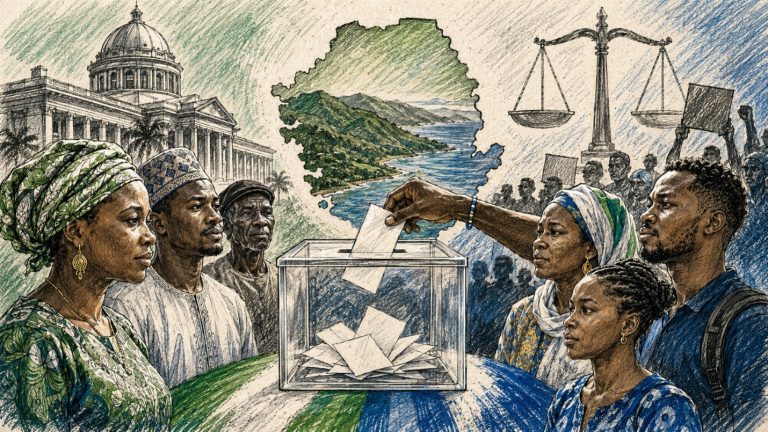
The 2023 elections exposed these fault lines vividly. The APC rejected the official presidential result, while the European Union Election Observation Mission and the Carter Center raised serious concerns about the transparency of the tabulation and the credibility of the announced results. The dispute produced a political impasse that eased only after the October 2023 Agreement for National Unity. A month later, armed attacks on military and prison facilities in Freetown—subsequently prosecuted as a failed coup attempt—underscored how quickly political mistrust can become a security crisis. The rivalry between the SLPP and APC also continues to reflect strong regional bases that often overlap with ethnic geography: the SLPP draws much of its support from the south and east, while the APC is strongest in the north and northwest. The agreement created a framework for dialogue, but it did not erase these divisions.
Building Institutions for Peace
The government has responded to these challenges with a comprehensive institutional reform agenda. The Office of National Security serves as the secretariat of the National Security Council, the country’s highest security decision-making body, chaired by the President. The ONS coordinates the Early Warning and Early Response mechanism to prepare for and respond effectively to threats ranging from public order issues to terrorism.
This architecture has been progressively decentralised. Provincial Security Committees, District Security Committees and Chiefdom Security Committees now bring security governance closer to communities. In Falaba District, Chiefdom Safety Committees have promoted local participation in maintaining law and order. In Pujehun, the Office of National Security credits collaboration between security institutions and communities with helping to keep the district peaceful. Such local structures matter because early warning depends on information and trust at the community level.
The government has also invested in conflict prevention through the Independent Commission for Peace and National Cohesion, established to build partnerships with local and international stakeholders. The National Early Warning and Response Mechanism Centre, placed on a statutory footing in May 2025, is mandated to provide early warning on threats to human security and peace and to coordinate and track responses. These institutions represent a significant evolution from the post-war period, when Sierra Leone lacked structured mechanisms to anticipate and prevent conflict. Their value, however, will be measured by whether warnings lead to timely action.
Security Sector Transformation
Perhaps the most visible reform is the ongoing transition of the Sierra Leone Police from a “Force” into a “Service.” A high-level delegation travelled to Ghana in 2024 to learn from the Ghana Police Service how a police institution can evolve into a modern, accountable and professional body trusted by the people it serves. The Legal Reform Commission has led a review of the 1964 Police Act, while a Strategic Development Plan for 2025–2029 provides a roadmap for institutional change. Community engagement is central to this transition, with Local Unit Commanders expected to spend more time in neighbourhoods, listening to residents and working with them to solve problems. As the Inspector General of Police put it: “We are transitioning to a service-oriented approach in policing, focusing on meeting the needs of the community.”
The government has also strengthened the security sector through concrete investments. In February 2026, it announced a 25 percent salary increase for all ranks of the Republic of Sierra Leone Armed Forces, effective from April, and launched the country’s first home-grown National Defence Policy and Strategy. Civil society organisations have also been brought into security-sector governance through workshops intended to strengthen their role in oversight and reform. These efforts recognise that security is not solely the responsibility of the state; it also requires partnership with citizens and civil society.
Regional Cooperation and International Engagement
Sierra Leone’s government has also recognised that peace and security cannot be secured within national borders alone. It has called for the Mano River Union’s political and security role to be revitalised as part of renewed efforts to address border-related disputes through diplomacy and regional cooperation. Dialogue among Sierra Leone, Guinea and Liberia has helped create a framework for resolving cross-border concerns without conflict. This approach matters in a subregion where local disputes can easily acquire regional consequences.
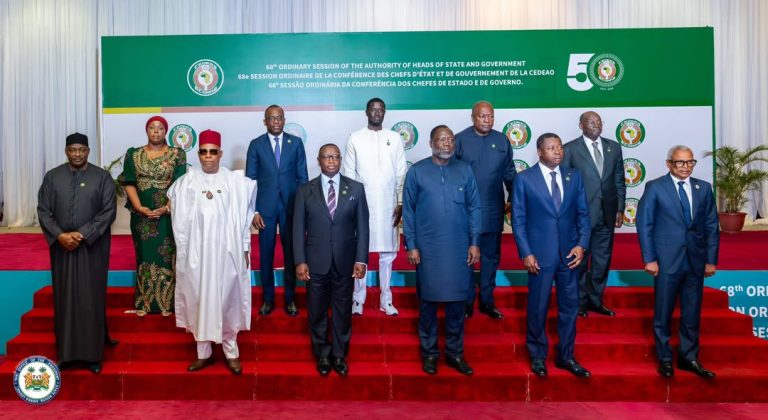
At the continental and global levels, Sierra Leone has taken on prominent roles. The country served on the African Union Peace and Security Council for the 2024–2026 term and was re-elected to the Council in 2026. It also returned to the United Nations Security Council for 2024–2025 after more than five decades. President Bio assumed the chairmanship of the ECOWAS Authority of Heads of State and Government in June 2025 and has proposed an ECOWAS–UN–AU Compact for Peace and Resilience in the Sahel. These roles have given Sierra Leone a platform to contribute to regional and global peace efforts. They should also reinforce the case for credible reforms at home.
The Work Still to Be Done
Despite these achievements, significant challenges remain. The Truth and Reconciliation Commission recommended constitutional reform in 2004 to strengthen democratic governance and sustainable peace. More than twenty years later, the 1991 Constitution remains largely intact. Implementation of the 80 electoral, institutional and legal reforms proposed by the Tripartite Committee in July 2024 is under way but incomplete. The government has also reopened the constitutional reform process and consulted on proposed amendments, but the process has yet to produce a new constitutional settlement. Completing it transparently and inclusively remains central to Sierra Leone’s democratic consolidation and peacebuilding agenda.
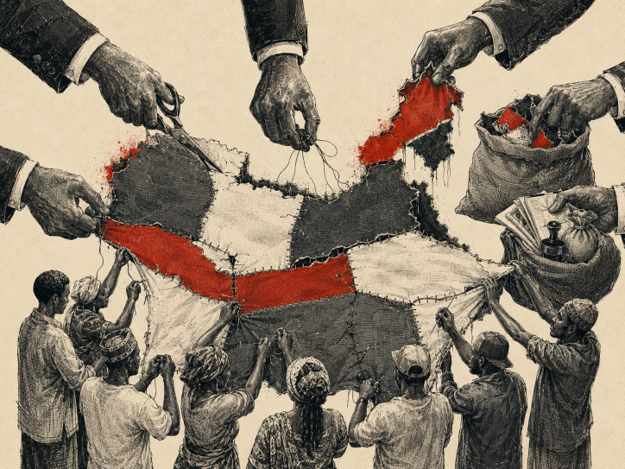
The over-centralisation of power and resources continues to fuel divisive politics. The 1991 Constitution concentrates significant authority in the executive, while the Mines and Minerals Development Act vests ownership and control of minerals in the state. The public service accounted for 39 percent of formal employment in 2018, making access to state institutions and appointments disproportionately important to economic opportunity. This concentration raises the stakes of elections and encourages zero-sum politics, in which losing control of the state can also mean exclusion from jobs, contracts and public resources.
The government must therefore do more than design reforms—it must implement them effectively. The police transition must be fully resourced and independently assessed. The National Early Warning and Response Mechanism Centre must have the authority and resources to ensure that warnings trigger action. The government should also publish a clear timetable and progress tracker for implementing the 80 Tripartite Committee recommendations and complete the constitutional process through a genuinely inclusive referendum.
Conclusion
Sierra Leone has made remarkable progress since the end of its civil war. The government has built institutions, begun to reform the security sector, engaged regionally and assumed international leadership roles. But the foundations of peace remain under pressure. Poverty, youth economic exclusion, weak institutions and the over-centralisation of power have not been fully addressed. The government’s role is therefore not simply to maintain order, but to transform the conditions that produce conflict.
The people of Sierra Leone do not need more agreements or promises. They need implementation. They need a constitution that distributes power and resources more equitably. They need a police service that protects rather than intimidates. They need early warning systems that prevent conflict before it erupts. And they need a government that treats peace not as a slogan, but as the foundation of everything else. The reforms are already on the table. The question is whether the government has the political will to carry them through.
Mohamed Bernard Sheriff is a master’s student at the University of Makeni and a technology and digital communications professional with a background in business and information technology. He serves as Project and Operations Lead at Zion Technology Incorporated, where he supports technical and digital transformation initiatives.
The views and opinions expressed in this op-ed are solely those of the author and do not reflect the official position, policies, or views of any affiliated institution or organisation.
Copyright © 2026 Governance & Research Centre – University of Makeni