Has Sierra Leone’s Democratic Journey Delivered or Only Endured?
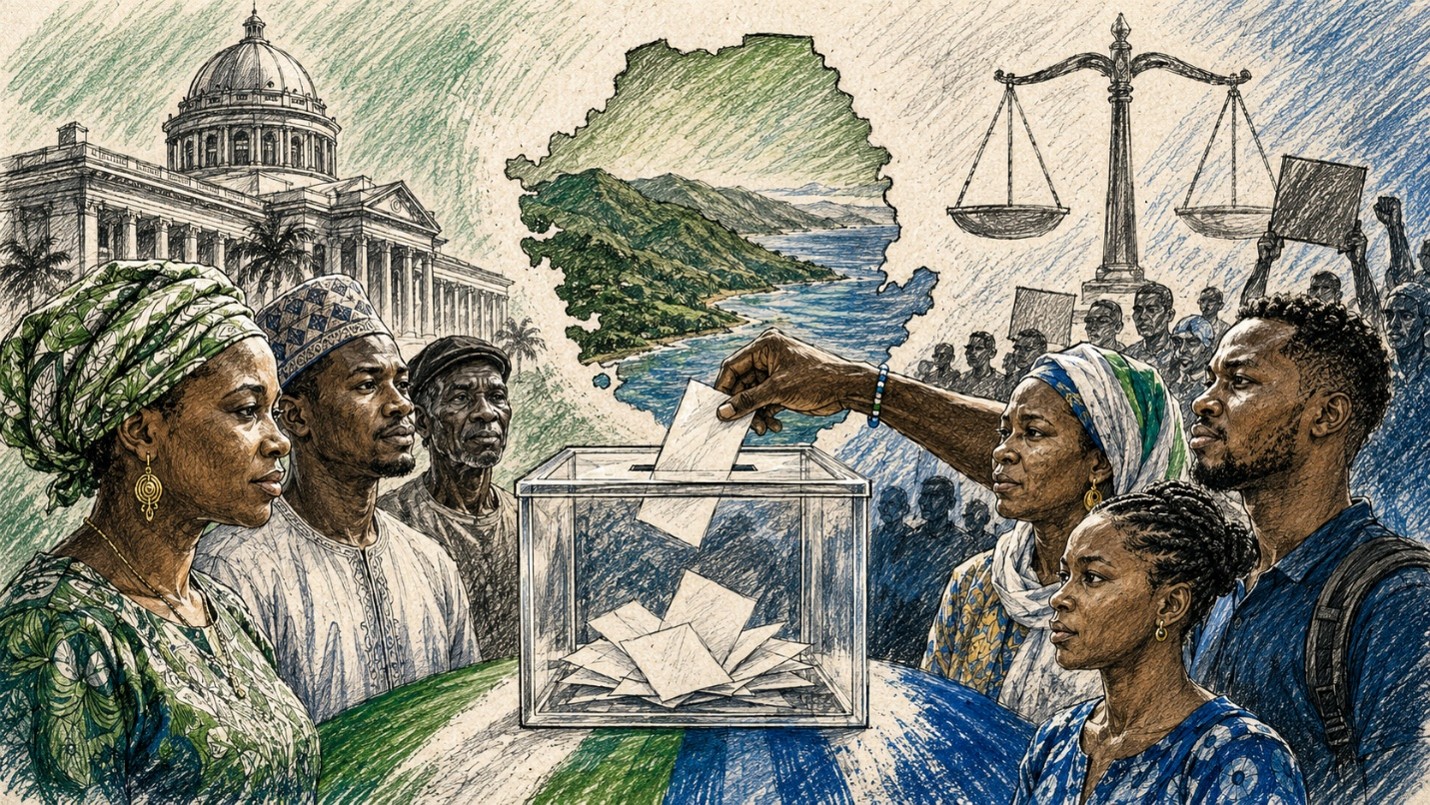
In 1991, Sierra Leoneans made a defining constitutional choice about the country’s political future. Through a national referendum held in August of that year, roughly 80% of participating voters approved a new constitution that restored multiparty politics and formally repealed the 1978 one-party constitutional order. It should be noted that the 1991 Constitution did not create Sierra Leone’s first democratic order from scratch, as the preceding 1961 framework had already established parliamentary democracy. What it did was reclaim constitutional democracy through a deliberate popular mandate. Yet this mandate was born not in calm but in crisis, as the Revolutionary United Front insurgency was beginning along the eastern border with Liberia. Thus, the adoption of a democratic constitution was an act of political courage which, however amended and however imperfectly practised, survived violence, coups, displacement and institutional collapse that followed.
That is why the central question today is not whether democracy was the right choice. It was, and it remains so. The harder question is whether Sierra Leone has translated democratic legitimacy into democratic performance. Have we built a system that enforces security and development, and ensures a state that works in the citizens’ interest? On that score, the answer is mixed.
There is Some Progress to Defend
Since the first elections under the 1991 Constitution in 1996, Sierra Leone has repeatedly returned to competitive electoral politics and has experienced peaceful alternation between its two dominant parties, the Sierra Leone People’s Party (SLPP) and the All People’s Congress (APC), most notably in 2007 and again in 2018. That record matters in a region where military intervention has too often interrupted constitutional rule. The nation has utilised democratic space to advance a rights-based legislative agenda, which has been instrumental in codifying equality and building the institutional framework necessary to hold power accountable.
However, none of the above proves that Sierra Leone’s democracy is fully consolidated. Questions, therefore, arise about how well we have performed democratically, yet this is precisely why the constitutional journey matters. It shows that, even within a flawed democratic order, Sierra Leone has repeatedly created openings for reform, accountability, and civic renewal. Nevertheless, it does prove that constitutional politics has produced reformist openings that deserve to be strengthened rather than dismissed.
Endurance is Not the Same as Delivery
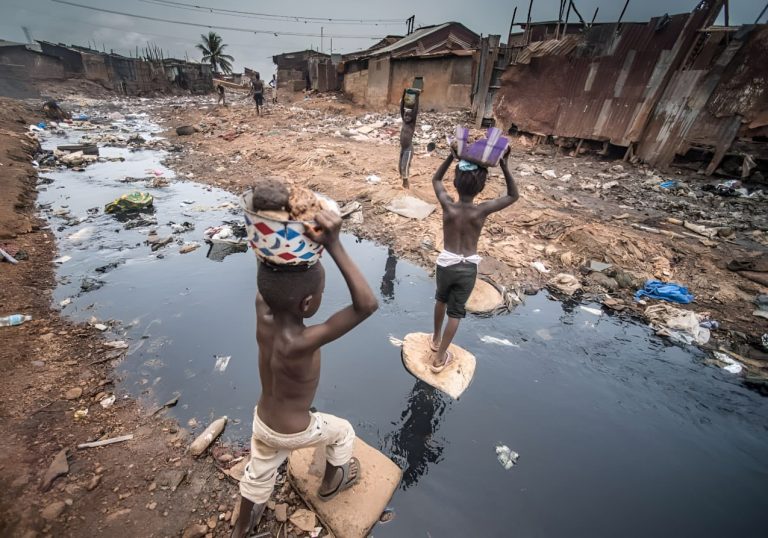
The development gap in Sierra Leone is too large to ignore. The United Nations Development Programme (UNDP) placed Sierra Leone 185th out of 193 countries in the 2025 Human Development Report, with an HDI value of 0.467. UNDP’s 2025 Multidimensional Poverty Index found that 59.2 percent of Sierra Leoneans were multidimensionally poor, with another 21.3 percent vulnerable to multidimensional poverty. The intensity of deprivation among the poor stood at 49.5 percent. The Food Security Monitoring System by the World Food Programme reported in early 2024 that 82 percent of the population was food-insecure.
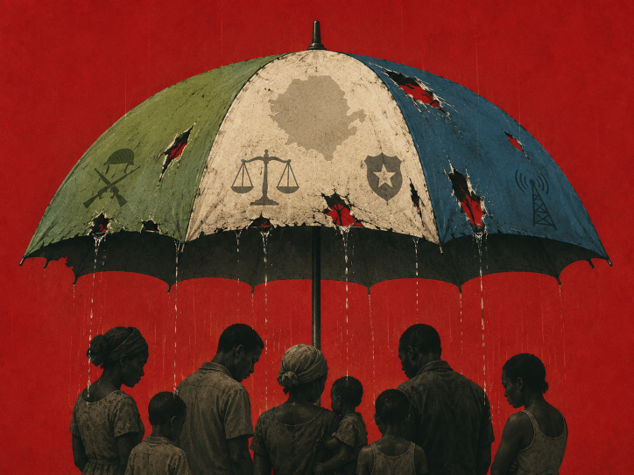
Those are not just development statistics. They are democratic stress indicators. Rising from the ashes of post-war democratic governance, the republic, according to UNDP data, has yet to provide adequate security in daily life through education, healthcare, access to food, and basic services. Looking at how far the nation has come since tearing down the one-party order in 1991 and the Civil War, there is still more that we can do for true progress requires two lungs: one political, one economic, and it is time we let the country breathe with both.
Furthermore, development failure becomes a democratic problem when citizens begin to experience elections as rituals that change officeholders without changing living conditions. When poverty, food insecurity, and weak public services persist across successive governments, the public not only loses faith in one party. It begins to lose faith in the institutions through which parties compete. That is the danger Sierra Leone must confront.
Declining Public Trust
The most politically significant consequence of this development gap is the erosion of institutional legitimacy, and the evidence is stark. A 2025 survey by Afrobarometer found that 70.7 percent of Sierra Leoneans either “did not trust” or “trusted only a little” Parliament, while for the Electoral Commission, the figure was 64.7 percent. In 2018, those low-trust figures had been far lower, that is, 34 percent for Parliament and 33 percent for the then National Electoral Commission. Furthermore, democracy indices such as the Tyranny Tracker, Freedom House, the Economist Intelligence Unit, Varieties of Democracy Institute, Bertelsmann Transformation Index, and International IDEA have ranked Sierra Leone as a hybrid regime, partly free, a backsliding democracy, and a defective democracy. The point is not that Sierra Leone lacks democracy. It is that too many citizens have begun to doubt whether democratic institutions are acting credibly enough to deserve deep confidence.
Rethinking Our Approach
Why then have successive systems underdelivered, one may ask? The most convincing explanation is political culture, not constitutional principle. Our nation’s democratic arena still rewards too much identity signalling and too little programmatic competition. When policies are absent from campaign debate, and surnames themselves become political messages, it signals a democracy built on weak institutions. Such politics rewards party loyalty over policy performance, disrupts continuity in development, and turns elections into mandates for partisan control rather than effective governance. Therefore, the capacity to effectively contribute to sectors that drive economic growth, such as agriculture, infrastructure, manufacturing, and technology, is limited. Hence, in such a setting, democracy survives, but delivery stalls.
One may further ask: what is the way forward? Or how can we reshape the agenda? Well, Sierra Leone does not need less democracy. It needs a version of democracy that is more programmatic, more transparent, and more accountable. That means more open party nomination rules, stronger parliamentary scrutiny, more credible enforcement against corruption, better protection for information access and media scrutiny, and civic education that teaches citizens to judge candidates by policy and performance rather than lineage, region, or party inheritance. These are not theoretical aspirations. They are consistent with Sierra Leone’s own institutional architecture and with comparative democracy guidance that emphasises internal party democracy, policy development, political finance transparency, and enforceable accountability as the building blocks of stronger representation.
Conclusion
The 1991 referendum was not a romantic moment to be remembered only ceremonially. It was a binding democratic instruction. Sierra Leoneans chose a republic in which sovereignty belongs to the people and governments derive legitimacy from the ballot. Three and a half decades later, that instruction still stands. But the ballot was never meant to be the ceiling of democracy. It was meant to be the foundation for accountable government, public service, dignity, and development. Sierra Leone’s democracy has endured. If it is to keep its moral authority, it must now deliver.

Hon. Mustapha Musa Sellu is a Master’s student pursuing an M.A. in Sustainable Development at the University of Makeni. He currently serves as a Member of the Sierra Leone Parliament, representing the People of Moyamba District in the Southern Region. He has a solid background in Finance and Economics, including development work. He is a member of the ruling party, SLPP
The views and opinions expressed in this op-ed are solely those of the author and do not reflect the official position, policies, or views of any affiliated institution or organisation.
Copyright © 2026 Governance & Research Centre – University of Makeni