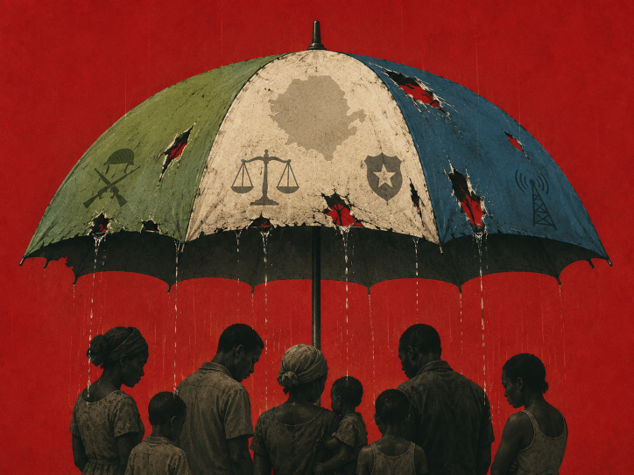
Sierra Leone Cannot Build Nationhood on Ethno-Regional Politics
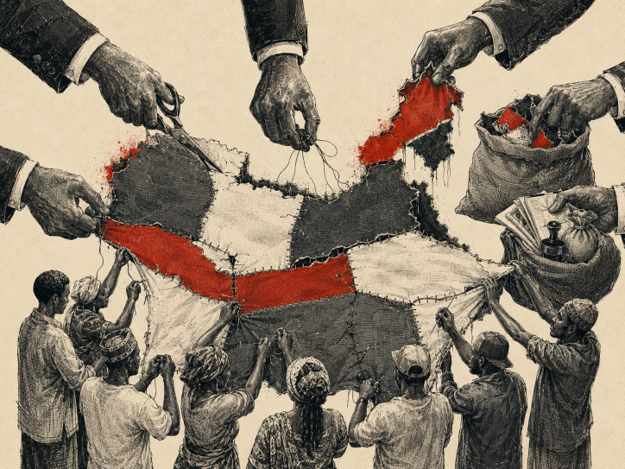
Sierra Leoneans often live together more easily than our politics suggests. Across the country, people intermarry, trade, worship and build friendships beyond ethnic lines. Afrobarometer’s 2025 survey found that 93 percent of citizens express tolerance toward people of other ethnicities and 87 percent toward people with different political affiliations. Yet when elections approach, the country repeatedly returns to a familiar political map: the Sierra Leone People’s Party draws its strongest support from the South and East, while the All People’s Congress dominates much of the North, North-West and parts of the Western Area.
That contradiction should be at the centre of the national debate. Sierra Leone’s diversity is a source of cultural richness, not a defect. The real danger is the political use of identity. International IDEA’s comparative research finds that the country’s ethnic divisions are closely reflected in perceptions of electoral credibility, government performance and access to justice. In other words, ethnicity becomes dangerous when political actors turn it into a route to state power, public appointments and development benefits.
Ethno-regional bias is therefore more than a matter of voting preference. It is a deterrent to cohesion and nationhood because it encourages citizens to see an election not simply as a choice between programmes, but as a contest over which communities will belong at the centre of the state and which will remain at its margins. Unless Sierra Leone changes that political logic, every close election will continue to feel like an existential struggle.
The historical roots of a modern problem
The roots of this problem reach back to the colonial division between the Colony of Freetown and the much larger Protectorate. These administrative categories created unequal political experiences and sharpened competition over representation, education and access to the state. Sierra Leone’s Truth and Reconciliation Commission later documented how colonial divisions, cronyism and the politicisation of regional and ethnic identities weakened national cohesion.
After the 1947 Constitution brought the Colony and Protectorate into a single political framework, party competition gradually became another line of division. The SLPP and APC emerged as the two dominant parties, and the bitter struggle surrounding the 1967 elections helped entrench the idea that controlling government meant controlling the future of one’s supporters. Over time, party loyalty, regional belonging and ethnic identity became increasingly difficult to separate.
But it would be wrong to rewrite Sierra Leone’s civil war as an ethnic war. The principal causes were corrupt and autocratic governance, economic mismanagement, exclusion, the collapse of public institutions and the alienation of young people. Ethnicity was not the driving force of the conflict. The lesson is more precise: when a state is unjust and political elites exploit identity, regional differences can deepen distrust and make national crises harder to resolve.
The 2023 election exposed the divide
The 2023 general election showed how durable this political pattern remains. The European Union Election Observation Mission described a campaign centred more on personalities and ethno-regional alliance-building than on issues. It confirmed at least 17 violent attacks during the campaign period and found that political participation was restricted in parts of the South and South-East. The same report concluded that the opaque tabulation process and statistical inconsistencies undermined confidence in the results.
The Carter Center’s final report went further, concluding that although election day was generally well administered, serious irregularities and a lack of transparency during tabulation severely damaged the credibility of the announced outcome. The APC rejected the results and alleged tallying irregularities. The immediate problem was electoral, but the deeper consequence was national: citizens no longer agreed on the credibility of the same institutions or even on the basic facts of the same election.
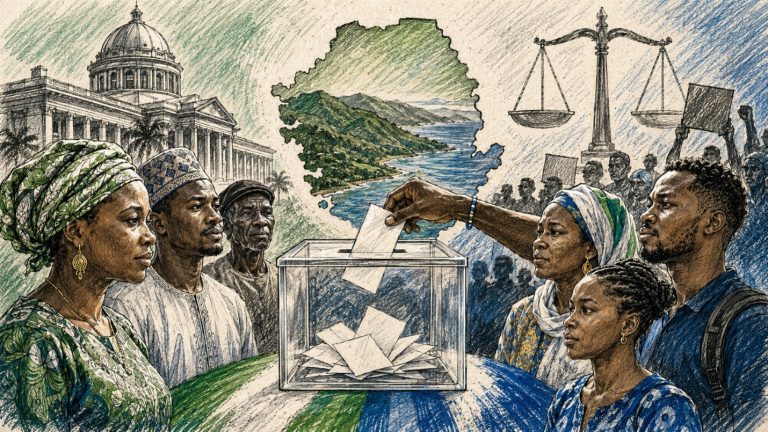
That fracture is visible in public opinion. Afrobarometer data published in December 2025 show that 93 percent of SLPP supporters and about nine in ten residents of the Eastern and Southern regions viewed the 2023 election as free and fair. Only 41 percent of APC supporters and fewer than half of respondents in the rest of the country agreed. Trust in the Electoral Commission for Sierra Leone fell from 64 percent in 2018 to 34 percent in 2025. A country cannot build durable nationhood when confidence in a national institution depends so heavily on party and region.
The deadly August 2022 protests should also be understood carefully. Reuters reported that at least 21 civilians and six police officers were killed as anger over economic hardship erupted in Freetown and northern towns. Poverty and the rising cost of living were genuine grievances; they should not be reduced to ethnicity. The danger begins when political actors translate economic pain into regional resentment and persuade citizens that hardship is the deliberate punishment of one political bloc by another.
When the state becomes the prize
Why does ethnicity carry so much political weight? One reason is the winner-takes-all character of Sierra Leonean politics. A UNDP-supported inter-party dialogue guideline acknowledges that the country’s electoral history has favoured a two-party duopoly and winner-takes-all competition. When a change of government is expected to reorder appointments, contracts, access and development priorities, voters are encouraged to organise as blocs rather than citizens.
This is why allegations of regional favouritism are so damaging, even when individual claims are disputed. If citizens believe roads, electricity, public employment and senior appointments follow the electoral map, every government project becomes evidence in a partisan case. Marginalisation—real or perceived—is a recipe for division, social tension and conflict. The state must not appear to reward the regions that voted for the governing party and punish those that did not.
Citizens themselves appear ready for a more inclusive politics. In the 2025 Afrobarometer survey, 93 percent of respondents said that governments should promote regional and ethnic balance in political appointments. Seventy-three percent said they would support their party appointing people from other ethnic groups to important positions. The public is therefore not asking for permanent ethnic camps. It is asking for a state that appears and functions as a national entity.
What nationhood now requires
First, political appointments must be both merit-based and visibly inclusive. Regional balance should not become tokenism or an excuse to weaken professional standards. The government should publish clear appointment criteria and regular information on the regional, gender and professional composition of senior public offices. Transparency would allow citizens to judge patterns based on evidence rather than on rumour.
Second, the allocation of development resources must be governed by public need and transparent formulas. District-level spending, project selection and completion data should be easy to access. No community should have to support the ruling party in order to receive a road, a hospital, electricity, or a school. Development is a right of citizenship, not a reward for electoral loyalty.
Third, political parties must stop treating regions as inherited property. They should recruit leaders across ethnic and regional lines, present credible policy alternatives and discipline officials who rely on inflammatory rhetoric. The BTI 2026 country report warns that political rhetoric, misinformation and hate speech on social media increase the potential for violence. Parties, media organisations and civil society should challenge this rhetoric without turning legitimate criticism into a speech offence.
Fourth, national institutions must interrupt the cycle rather than become part of it. The police, judiciary, Electoral Commission, Political Parties Regulation Commission and other public bodies must act—and be seen to act—without partisan or regional bias. The Independent Commission for Peace and National Cohesion has a legal mandate to prevent and resolve conflict and promote sustainable peace. That mandate should include regular public assessments of ethno-regional tensions, early intervention and open reporting on how institutions respond.
Finally, the Agreement for National Unity and the Tripartite Committee’s 80 electoral recommendations must be treated as a reform programme, not the ceremonial end of a political dispute. Implementation should be tracked through a public timetable, with clear responsibilities and measurable progress. Publishing polling-station results, strengthening consultation around electoral decisions, addressing violence impartially and rebuilding trust in the ECSL are not technical details. They are part of rebuilding a shared national political community.
A nation larger than its parties
Sierra Leone does not need its citizens to abandon their ethnic identities. It needs a political system that never makes identity a condition for belonging, opportunity or protection. A Temne, Mende, Limba, Kono, Krio, Loko, Fullah, Kuranko, Sherbro or Mandingo citizen should not have to calculate whether a surname, birthplace or party colour will determine access to the state.
The country’s peace and stability must be placed above party advantage. That requires responsible political speech, credible elections, fair appointments, equal development and institutions strong enough to resist pressure from whichever party is in power. It also requires citizens to judge leaders by policies, performance and integrity—not simply by the region from which they come.
Speeches alone will not produce national unity. It will be built when the state serves every district regardless of how its people voted, when an election defeat does not create fear of exclusion, and when public institutions command trust across the political map. Only then will ethnicity remain a source of culture and community rather than political currency. That is how Sierra Leone can turn peaceful coexistence into genuine nationhood.
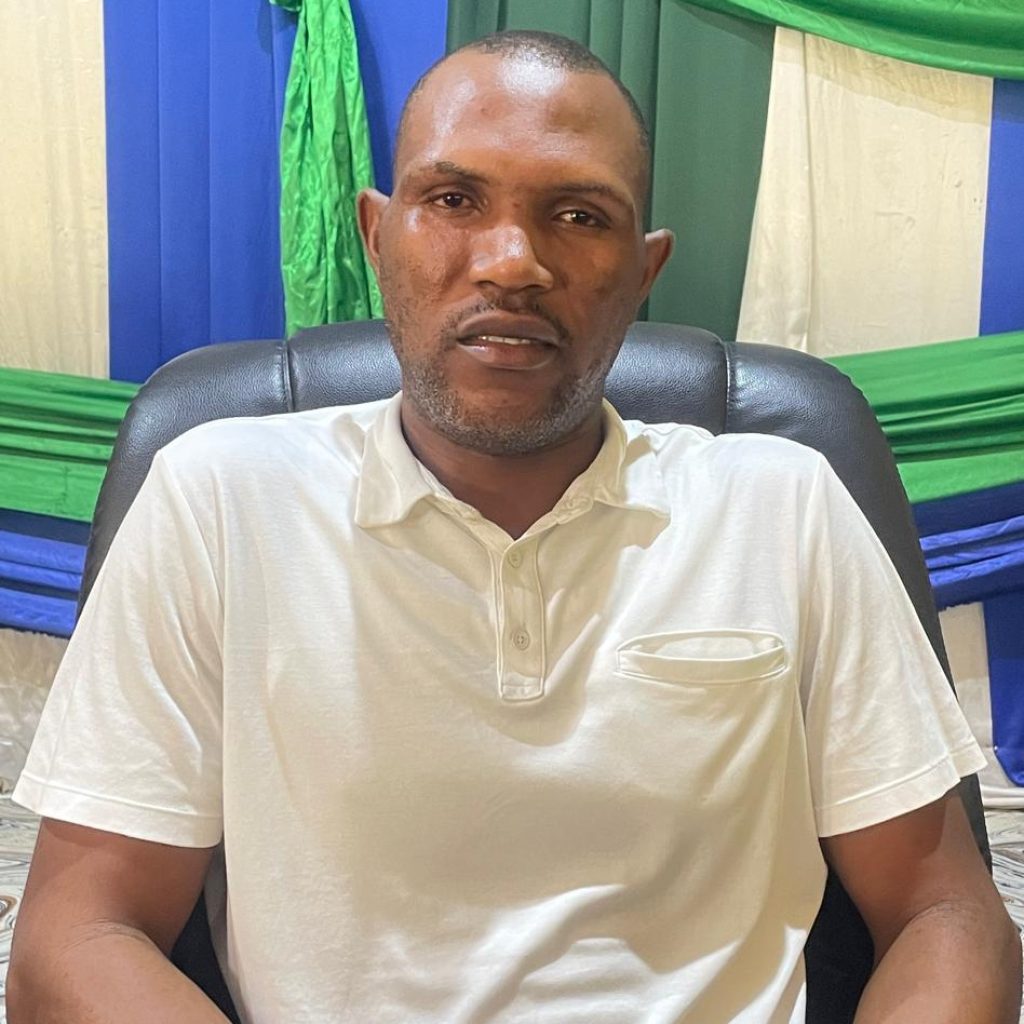
Alfred Kelleh Kargbo is a Master’s student at the University of Makeni. He holds a Bachelor’s Degree in Social Work from Fourah Bay College, University of Sierra Leone. Alfred serves as a Project Officer with the Cotton Tree Foundation, supporting alternative livelihood programmes across Sierra Leone. His interests include community development, social justice, sustainable development, and political reform.
The views and opinions expressed in this op-ed are solely those of the author and do not reflect the official position, policies, or views of any affiliated institution or organisation.
Copyright © 2026 Governance & Research Centre – University of Makeni