Powerships and Paper Promises: Sierra Leone Must Break Its Addiction to Emergency Electricity
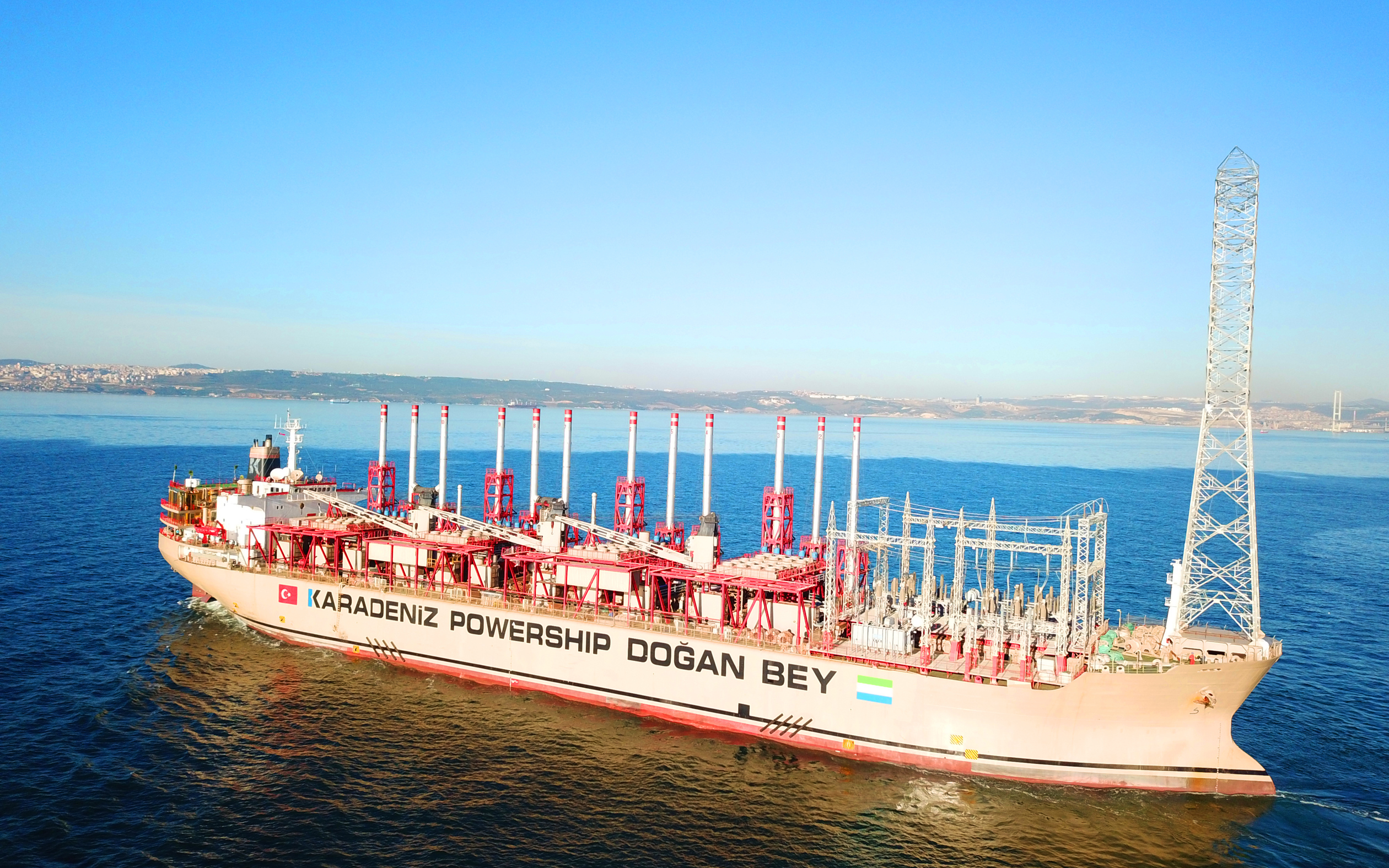
In Freetown, there exists an evil ceremony, and that is our reliance on emergency power generation from a ship in our harbour. Neighbours adjust their evening plans to the sound of their neighbour’s generator. Welders and hairdressers drop everything in the middle of their workday, and cold-chain drugs spoil in refrigerator cabinets in clinics. Students gather under the lights of gas stations to review their exams, and the nation holds its breath every couple of months in anticipation of whether that foreign ship will shut down our meagre power again. The sad truth of Sierra Leone’s current electricity system is that there is no system: this is our state of emergency.
For more than a decade, Sierra Leone has viewed electricity as a problem to be bandaged rather than developed. As a result, we are left with an energy system that is incredibly expensive, provides power to roughly a third of the population at any given time, and leaves us hostage to a foreign vessel. If Sierra Leone wants to develop its economy, there is one thing which is absolutely imperative. We will never solve our energy crisis until we start generating and owning electricity, rather than paying monthly fees to rent power.
A grid built on emergency solutions
Let us consider the precariousness of our current situation. The powership operated by Karpowership currently provides some of the largest amounts of electricity in the city. The company first signed a power generation deal in 2018, which ended in the middle of 2025, after which the contract was renewed for one more year. Under the contract, the vessel supplies up to 45 megawatts to Sierra Leone during the dry season. However, as reported in early 2026, by January, the power supplied by it had already decreased to about 5.6-6 megawatts. Once again, this is due to the very obvious fact – Sierra Leone cannot pay its debts.
Minister of Energy Cyril Arnold Grant estimated that the country’s outstanding electricity bill stood at close to 100 million US dollars, including payments to Karpowership, power suppliers in Côte d’Ivoire, solar producers, and neighbouring Guinea. In 2025, when the powership gave notice of the suspension of operations, and the Ministry of Energy warned citizens to prepare for months without electricity, this demonstrated the insanity of our current situation – electricity in a sovereign country is provided by a private corporation. Furthermore, we have built our entire economy on a power source that disappears for several months each year.
Money wasted in the dark
If the blackouts are not scary enough, we must examine the financial side of the issue. Between 2018 and 2025, Sierra Leone has spent at least 320 million dollars on electricity procurement. Imagine what that sum of money could have been spent on! A second hydro power station, a large solar power farm, or simply maintenance and repair of the infrastructure to ensure electricity flows.
Indeed, according to the government’s statement, almost 55% to 72% of all electricity produced is lost. Inefficient infrastructure and illegal tapping are to blame for the fact that, having borrowed huge amounts of money to pay for our power rental, we are losing half of that electricity. No business, let alone a state-owned utility company, could survive on such an economic model.
This is precisely the point of it all. Not only do we lack energy resources, but our entire sector is dysfunctional. Our state is forced to spend exorbitant sums on emergency electricity, only to lose half of it before it can be used. The powership may be our problem, but our sector itself is ill. We do not have a sector that was built and managed as a business or public service.
What experts have advised for years?
Not surprisingly, experts have said this for years. Energy specialists, the African Development Bank, and the Government of Sierra Leone’s National Energy Sector Roadmap have said this for years. Build our own energy sources, tap hydro and solar, and, most importantly, stop losing half of all electricity.
Indeed, there is some positive news in this regard. The National Energy Compact, launched in 2025, states that by 2030, access to electricity in Sierra Leone will increase from a current third of the population to 78%, while increasing our generation capacity. Additionally, there are projects like Bumbuna II and the hydro-solar energy generation scheme. These projects, if successfully implemented, could change the energy balance of the country. Of course, Sierra Leone is notorious for its ambitious roadmaps, which remain far from being realised. A roadmap is not a transformer. We need something more.
A real agenda for the Government
Four main commitments will be required to ensure energy stability.
- First, the government should announce a timeframe for our exit from dependence on the powership, with a public report every quarter.
- Second, the government should stop losing electricity and halt the haemorrhaging of the state budget before attempting to import another megawatt. This means measures should be taken to install prepaid meters, arrest offenders of large-scale electricity theft and reform the billing system as a condition of the next supply agreement.
- Third, we need transparency. Every emergency electricity deal, every payment for it, and every amount of megawatts supplied should be available on a state-run website. Citizens are entitled to know where their money is going and why they are living in darkness.
- Fourth, we need to address our two greatest challenges – the shortage of power during the dry season and reaching the rural population. This can be achieved by implementing solar-plus-storage projects, building mini-grids for the rural population and installing solar panels in every house.
How to turn the lights back on
Operating a nation with power outages takes tremendous effort, but every blackout means someone cannot open their shop, a clinic cannot refrigerate medicine, and students cannot study after dark. We have paid incredible sums to support a foreign ship that generates our power, leaving our own hydropower plant idle throughout the dry season and allowing half of all electricity to drain away.
After all, the powership was merely a temporary solution. By 2027, we should not have to warn our citizens to buy hurricane lamps to get by. The decision facing the Government of Sierra Leone today is simple – it can either continue renting its emergency power, or begin producing its own electricity, as was envisioned at our independence.
Foday Augustine Bangura is an accomplished academic and administrative leader with extensive experience at the University of Makeni (UNIMAK), where he has served in senior roles including University Registrar, Dean of Political Science and International Relations, and Deputy Registrar & Secretary to the Governing Council. He is pursuing a PhD in Educational Administration and Leadership, with research focused on university-community service policies in Sierra Leone.
The views and opinions expressed in this op-ed are solely those of the author and do not reflect the official position, policies, or views of any affiliated institution or organisation.
Copyright © 2026 Governance & Research Centre – University of Makeni