Why Sierra Leone Must Turn Waste Into Fuel to Save Its Forests
Sierra Leone is confronting a dual environmental and energy crisis that threatens both its unique biodiversity and the daily survival of its citizens. The nation has lost approximately 2.17 million hectares of tree cover between 2001 and 2024, representing a staggering 39 percent of its total forest cover. This deforestation is primarily driven by the demand for wood-based cooking fuels, as over 80% of the country’s total energy consumption is derived from biomass. The situation is further compounded by a severe lack of access to modern energy infrastructure. While only 27% of the population has access to electricity, a mere 1% has access to clean cooking technologies. This paper argues that the large-scale production and adoption of biomass briquettes made from agricultural waste presents a technically viable, economically beneficial, and socially responsible solution to break the cycle of deforestation and energy poverty in Sierra Leone. By analysing the systemic failures of the current energy model and presenting evidence from local innovations and regional successes, this paper will demonstrate that a strategic transition to briquette fuel is both feasible and essential for the country’s sustainable future.
Deforestation and Energy Use in Sierra Leone
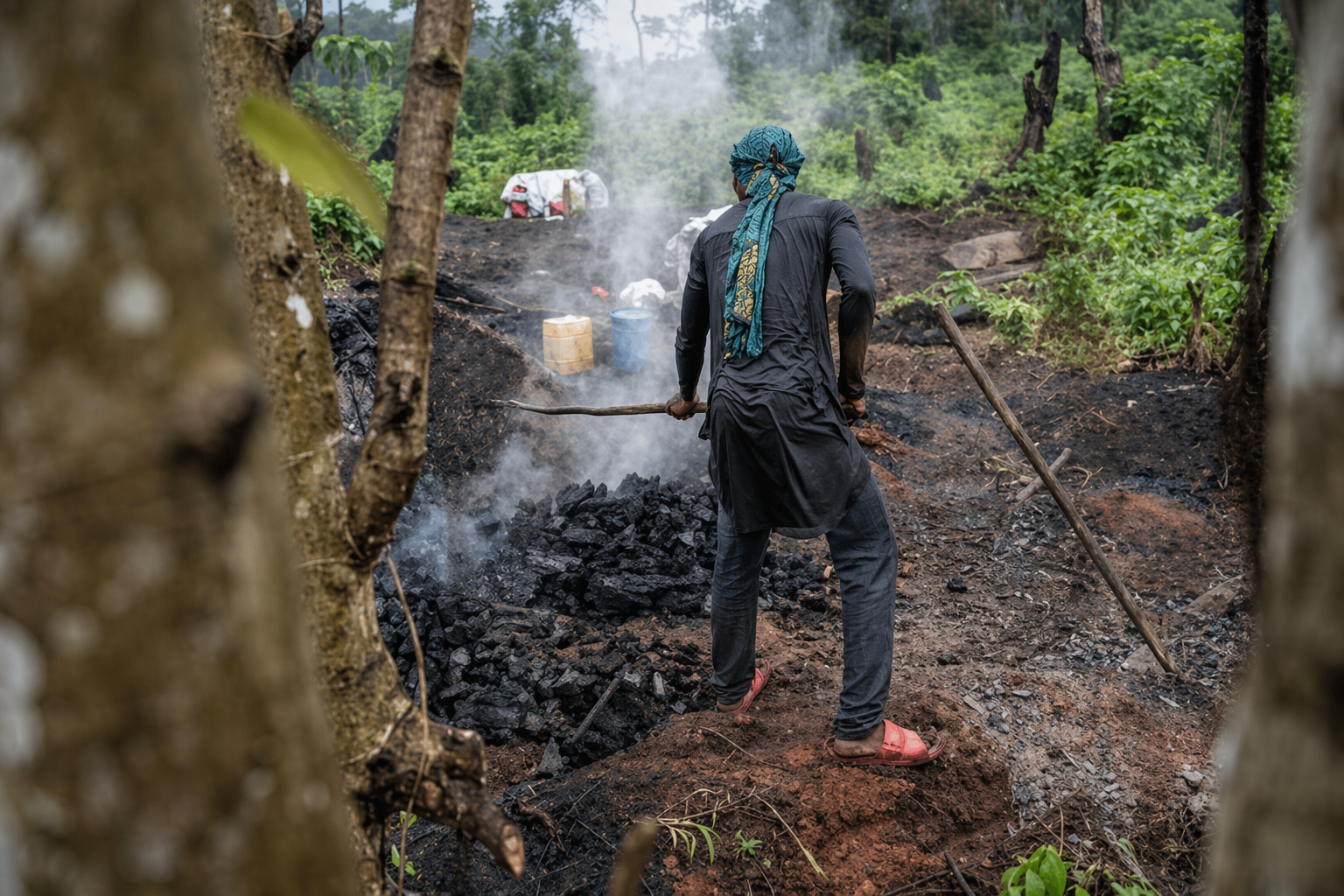
The interconnected relationship between energy consumption and forest loss lies at the heart of Sierra Leone’s environmental degradation. The country’s energy profile is dominated by traditional biomass, which accounts for over 80% of all energy use, with wood fuel and charcoal as the primary sources. This heavy reliance directly leads to the destruction of forest landscapes. To meet current charcoal demand, it is estimated that over 533,000 hectares of forest are required each year. The scale of this impact is most evident in the Western Area Peninsula, home to the capital Freetown, which lost more than 10,000 hectares of tree cover between 2001 and 2024. The consequences extend beyond biodiversity loss. Deforestation has been directly linked to deadly disasters. Notably, in 2017, the mudslide on Mount Sugar Loaf resulted in 1,141 victims, including both fatalities and missing persons.
Charcoal Dependence and Its Impacts
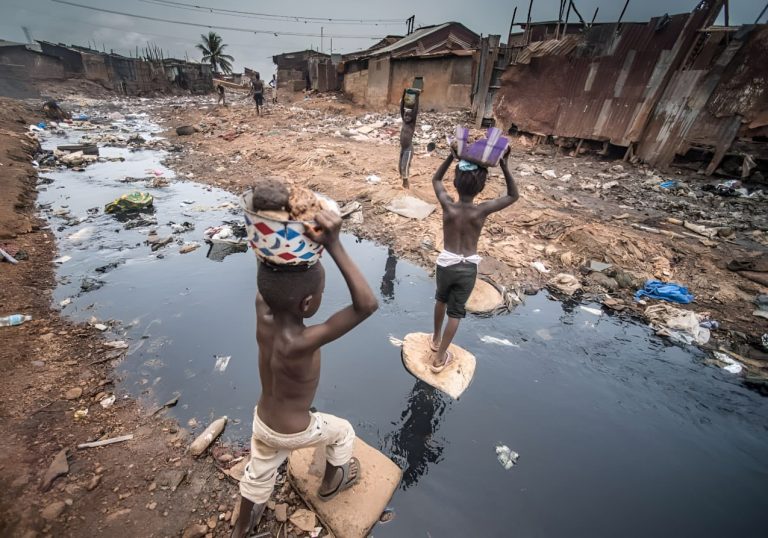
The failure of existing energy solutions is most starkly illustrated by the near-total dependence on charcoal, particularly in urban areas where access to alternatives is limited. In Freetown alone, approximately 289 tonnes of charcoal are consumed daily, underscoring the immense pressure on the country’s forests. This dependence is not a matter of preference but a consequence of systemic poverty and infrastructure deficits. The high cost of clean cooking options, such as liquified petroleum gas (LPG) cylinders, places them out of reach for most people. The cost of an LPG cylinder may exceed the rental expense incurred by an individual residing in a slum. Consequently, in communities like Susan’s Bay, over 90% of households rely on charcoal as their primary cooking fuel. The current system is inefficient at every stage. Charcoal is produced using traditional techniques that yield low amounts of charcoal, and the stoves used in urban areas have low levels of efficiency, which exacerbates the demand for fuel and perpetuates the cycle of deforestation. The market is also highly accessible, with 70% of charcoal retailers relying solely on this business for income, creating a powerful economic lock-in that makes transition more difficult.
Briquettes as an Alternative Energy Source
Unlike traditional charcoal, which accelerates deforestation, briquettes offer a circular economy solution by converting waste into a valuable energy resource. The production process is straightforward. Agricultural waste, such as coconut husks, rice husks, and sawdust, is collected, carbonised, mixed with a natural binder like cassava starch or molasses, and then pressed into compact blocks that burn longer and more efficiently than traditional charcoal. In Sierra Leone, local entrepreneurs are already demonstrating the viability of this technology. For example, Alhaji Siraj Bah, through his company Rugsal Trading, recycles coconut husks into smokeless bio-briquettes. Similarly, Margaret Yainkain Mansaray, founder of Women in Energy Sierra Leone Limited, produces eco-friendly briquettes from coconut husks and has trained over 100 women in their production. Scientific research supports these innovations, showing that biofuel briquettes can reduce carbon monoxide emissions by nearly a factor of ten and carbon dioxide emissions by more than sixty times compared to charcoal. However, further optimisation is needed to manage particulate matter emissions. The key advantage is that briquettes do not require tree cutting, offering a direct pathway to decouple cooking energy from deforestation.
Household and Social Implications
The transition to briquettes carries profound social implications, particularly for the women and children who bear the brunt of the current energy system. In Sierra Leone, cooking responsibilities and the task of procuring cooking fuels rest primarily on the shoulders of women and girls. The use of traditional biomass fuels exposes them to severe health risks. A study in Western Sierra Leone found a 32% prevalence of acute respiratory infections in women and a staggering 64% prevalence in children under five in homes using wood stoves. Briquettes offer a direct solution to these health hazards. When burnt, they produce significantly lower levels of harmful pollutants, creating safer indoor environments for families. Furthermore, the adoption of briquettes can shift household dynamics. By reducing the time spent collecting fuelwood and the money spent on expensive charcoal, briquettes can free up resources for education and other productive activities, thereby improving overall household well-being and social stability.
Economic Opportunities
The briquette industry represents a significant economic opportunity for Sierra Leone, capable of creating jobs and fostering local enterprise development. The production of briquettes from agricultural waste creates a new value chain that employs people in waste collection, processing, production, and sales. This is particularly impactful for youth and women, who often face barriers to formal employment. Alfred Muana, known as the ‘Waste General’ in the city of Bo, employs 16 people in his recycling enterprise and has trained 30 young people to produce briquettes from waste paper and biodegradable materials. His briquettes are in such high demand that people travel from other cities to purchase them. The economic potential is substantial. By creating a local industry, Sierra Leone can retain money that would otherwise be spent on imported fuels and generate income from what is currently considered waste. This circular economic model not only reduces environmental pollution but also builds resilience in local communities by diversifying income sources and reducing dependence on volatile global energy markets.
Environmental and Health Effects
The cumulative environmental and health benefits of a widespread transition to briquette fuel are immense, addressing two of Sierra Leone’s most pressing national challenges. Environmentally, the primary benefit is the direct reduction in tree cutting. By replacing charcoal with briquettes made from agricultural residues, the demand for wood fuel can be significantly reduced, allowing forests to regenerate and continue providing essential ecosystem services such as water regulation and soil stabilisation. The reduction in emissions is equally critical. Biofuel briquettes emit far less carbon monoxide and carbon dioxide, contributing to climate change mitigation efforts. However, careful attention must be paid to production methods, as some studies indicate briquettes can produce higher levels of fine particulate matter (PM2.5) than charcoal, necessitating ongoing research and quality control to optimise their burn properties. The health co-benefits are equally compelling. Reduced indoor air pollution directly translates to lower rates of acute respiratory infections, which currently affect 32% of women and 64% of children in wood-using households. A cleaner cooking environment also reduces the burden on the healthcare system, freeing up resources for other public health priorities.
Lessons from Other Countries
Sierra Leone can accelerate its transition to briquette fuel by learning from the policy successes and market-building strategies of neighbouring West African countries. Ghana provides a developing example in which the government has implemented policies, including tax incentives and subsidies, to encourage the production and consumption of biomass briquettes, as well as regulations to ensure product quality and safety. A study in Ghana estimates that sawdust charcoal briquettes could reduce Ghana’s greenhouse gas emissions by up to 30% by 2030. Kenya offers another successful model in which community-based briquette production has been integrated with financial literacy training to build strong local enterprises. Kenya offers an important example where community-based briquette initiatives have been combined with enterprise and business training to support locally managed fuel enterprises. These regional examples demonstrate that with appropriate policy support, briquette industries can scale rapidly, create thousands of jobs, and significantly reduce deforestation.
Line of Action
To realise the full potential of briquettes as a national solution, the Government of Sierra Leone must implement a comprehensive policy framework that addresses production, distribution, and consumer adoption. First, the government should integrate briquette production explicitly into the National Energy Policy and the recently launched Energy Transition and Green Growth Plan, which aims for 100% electrification by 2040 but currently focuses primarily on grid expansion. This integration should include the establishment of quality standards for briquettes to ensure consumer safety and confidence. Second, financial incentives are crucial. The government should offer tax holidays for briquette manufacturers and provide low-interest loans for the purchase of production equipment, as has been successfully done in Ghana. Third, public procurement policies should mandate that government institutions, schools, and hospitals use briquettes for cooking and heating, thereby creating a stable anchor demand to kick-start the industry. Fourth, international donors and development partners should prioritise funding for community-based briquette enterprises, recognising them as a cost-effective intervention for climate mitigation, public health, and job creation. Finally, a nationwide public awareness campaign is needed to educate consumers about the economic, health, and environmental benefits of switching to briquettes.
Conclusion
The evidence is clear. Sierra Leone’s dependence on wood-based charcoal is driving a deforestation crisis that threatens the country’s environment, health, and economic future. The current energy system is a classic trap. Poverty forces reliance on cheap but inefficient fuels, which in turn destroys the natural capital needed for long-term prosperity. However, this trap can be broken. Biomass briquettes made from agricultural waste offer a technically proven, economically viable, and socially just alternative. Local entrepreneurs have already demonstrated the feasibility of briquette production, and regional countries such as Ghana and Kenya have shown that the right policies can rapidly scale this solution. The path forward requires political will and strategic investment, but the returns are immense, notably reduced deforestation, cleaner air, better health, and new economic opportunities for thousands of Sierra Leoneans. By turning waste into fuel, Sierra Leone can turn away from tree cutting and toward a truly sustainable energy future.

Alie Bangura is a master’s student at the University of Makeni and holds a degree in Applied Accounting from the Institute of Public Administration and Management (IPAM). He works in the Livelihoods Department at Cotton Tree Foundation SL, where he manages budgeting, financial reporting, and internal controls and supports sustainable income-generating initiatives for vulnerable communities.
The views and opinions expressed in this op-ed are solely those of the author and do not reflect the official position, policies, or views of any affiliated institution or organisation.
Copyright © 2026 Governance & Research Centre – University of Makeni